
Breaking News!
StandOurGround presents its October 2026 Newsletter #18
The October Newsletter #18 includes:
- Russell Resident Don Greer Asks: Who Pays, Who Profits, Who Loses in Russell? Russell Township is apparently considering a proposal that deserves serious public scrutiny. Allegedly, the Township would pay to demolish its existing ice rink, transfer the cleared land to a developer for free, provide concessions on development charges and servicing costs, and potentially sacrifice a portion of the adjacent agricultural property to facilitate a low-cost housing development.
- Want to Know Where Your Mayor and Councillors Stand? Russell residents can take an active role by contacting their elected councillors directly by phone or email to ask where they stand on this proposal and related issues. Some councillors also share their views on their Facebook/Web pages, which are worth checking. Ask questions, seek clear answers, and find out how your representatives intend to protect taxpayers’ interests, recreational facilities and Russell’s agricultural heritage. These decisions affect our community for years to come, and residents have every right to know their councillors’ positions before decisions are made. Make your voice heard. Contact your councillors and ask for answers.
- The Rustler: A Valuable Voice for the Community. A strong community depends on informed residents. That is why The Rustler is such a valuable resource for Russell Township.
Please read or download our Newsletter on our Newsletter Page.
About us
Why did we start StandOurGround, and what are we worried about?
We started our group, StandOurGround, because many of us in the community are worried that our farmland and rural environment are fast disappearing. We all live here because, while accepting change, we want to preserve our basic rural way of life. If we don’t take action soon, we’ll lose the very things that make our township special.
Why is it important to save the farmland in Russell Township?
There are two key reasons.
- First, good farmland is disappearing quickly, with Ontario losing 319 acres every day. Only 5% of Ontario’s land is Prime Agricultural, and Russell holds a significant portion of this high-quality soil. Once it’s gone, it’s gone forever.
- Second, agriculture is Russell Township’s greatest asset. Canada’s agriculture sector could add $11 billion to the economy, more than auto manufacturing and aerospace combined. Sacrificing this potential for mega-warehouses and sprawling subdivisions is not only a missed opportunity; it’s a devastating setback.
What is our group trying to achieve?
We want thoughtful, controlled growth. Looking to towns like Port Hope, Uxbridge, and Caledon—places that have prioritized preserving farmland, natural beauty, and their unique character. These are examples of towns that actively involve residents in planning for growth, something we’re not seeing enough of here in Russell. It’s another missed opportunity. Based on their examples, we know it is possible to exist near a large urban centre like Ottawa without morphing into just another congested suburb.
Aren’t more homes needed as the population grows?
Yes, we fully support the dream of affordable home ownership here in Russell Township. Hundreds of new homes have been built here in the last several years and more to come. Unfortunately, new home construction is blindly absorbing hundreds of acres of our prime farmland. Mature forests are being randomly chopped down. Wetlands are being irretrievably destroyed. We want growth planned in a way that doesn’t cleanse the rural aspects that make Russell special.
How has development changed life in Russell Township?
Almost month-by-month, Russell has become a busier, noisier and less safe place to live. There’s more traffic, a higher number of road accidents, including fatalities. Life-giving trees are disappearing at a time when their preservation is more important than ever. Deer, certain hawks, other wildlife have all but disappeared. On a more insidious note, methane emissions from the burning of natural gas in more and more homes and industries is increasingly polluting our air. The rural environment that we cherish is being swept away at an alarming rate. This isn’t thoughtful development; it’s reckless sprawl.
What do we think about the Township’s approach to development?
The Township seems to give developers a free pass to do whatever they want. The people who live here and have helped build the township’s communities have no say. When we raise our concerns at meetings, council appears to listen but doesn’t hear. Communication with residents is at an all-time low. Decisions appear to be made in advance behind closed doors and simply rubber-stamped at council meetings. The meetings are held in a rigid, clinical atmosphere where taxpayer input is strictly limited. Council has no clear understanding of deeply-held community values.
What is our response to the Township's recent draft of the Official Plan, particularly regarding the new proposed special study areas for settlement and industrial development?
The special study areas in the Township's draft Official Plan are an insult to residents. They deprive the township of even more farmland for yet more housing construction and massive expansion of the industrial park. The more alarming aspect is that the areas were designated in the plan without allowing even a single resident’s feedback. Tellingly, the areas were rejected by the United Counties of Prescott and by the township’s own planners. This behaviour by council is dictatorial and undemocratic. The persistent push for development without community input suggests that council has a hidden agenda; that is, rampant growth first, taxpayers’ views second. We believe that any plans for growth should involve the voices of those who live here as the best way to preserve our community's values and rural character. Ignoring local input not only undermines trust but threatens the very essence of what makes our township special. We demand a planning process that gives taxpayers their rightful say and guarantees a balanced existence.
How do we respond to those who say development is progress?
Controlled change can be good. But change that goes too far, too fast is reckless. With extreme change comes higher crime rates, increased pressure on policing, excessive traffic congestion, greater pollution, erosion of wildlife habitat, need for more medical clinics, increased maintenance of sewers, water and roads and the list goes on and on. Take recreational facilities. The township is bulldozing ahead with a mega, multi-arena sports project at a cost of well over $100 million. Council continues to be vague on where the final dollars and cents will come from. We suspect council is considering hefty tax increases to help pay for it but has yet to let us know. We are a township of under 20,000 residents. To us, real progress means balancing growth with preservation of what we value — limited growth at a reasonable pace where people come first. Unthinking, headlong growth is a recipe for disaster.
What solutions are we proposing?
We’re demanding that the township council pause its development plans and take a reality check. We want to prioritize quality over quantity and focus on thoughtful growth that aligns with residents’ values. We want reasonable limits on development, more attention to residents’ concerns and strict protection for farmland and the environment. We also want to see more support for agriculture as a key part of our local economy.
Who is involved, or how can people get involved with our group?
Our group, Stand Our Ground, is just getting started. We are inviting like-residents to join us in achieving our goal of a community based on a blend of careful growth and protection of rural values. To help spread the word, our new lawn signs are now on sale. The $15 covers the cost of printing. Our website carries a questionnaire to help us gauge where you stand on the future of our township. We urge you to stay involved by regularly visiting our website, attending Russell Township Council meetings and, most important, by speaking out.
Together, let’s Stand Our Ground!
We urge all concerned citizens of Russell Township to attend this announcement and express their worries to Ontario politicians, the media, and Russell Council regarding the manner and pace of Russell's expansion, as well as the concerning lack of information provided to nearby residents of the Industrial Park prior to this announcement.
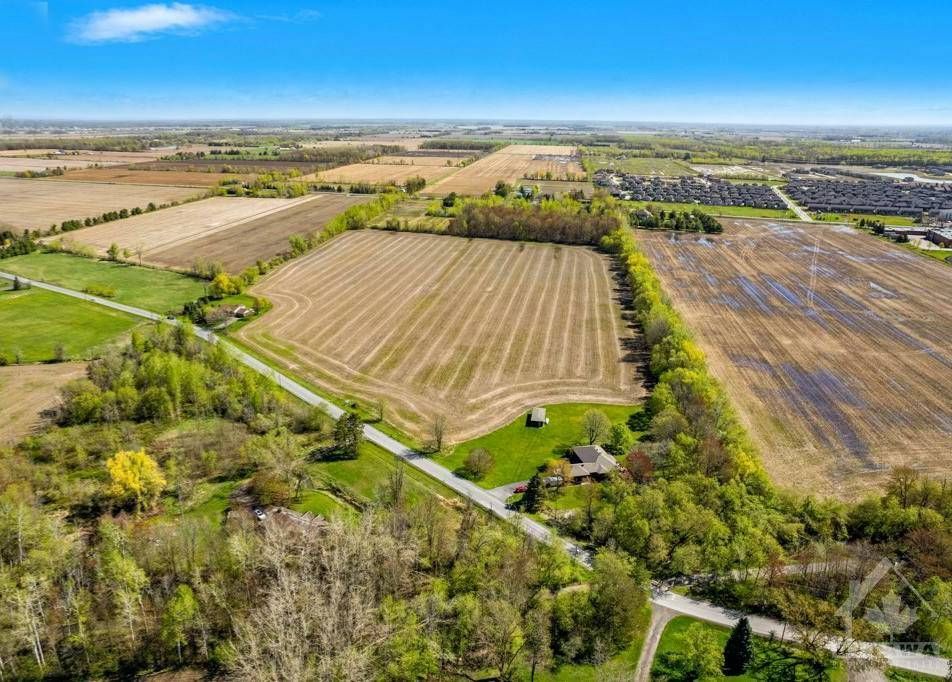
Productive Russell Township farmland on the verge of urban development.